Research Themes & Projects

Investigating natural product bioactives, molecular mechanisms, microbial enzymology, and in-vivo pharmacology at the University of Chittagong.

Overview

A Unified Scientific Agenda

Our research spans the spectrum from benchtop food chemistry and botanical extraction to computational simulations and in-vivo genetic assays. What unites our work is an insistence on rigorous empirical methodology, reproducible protocols, and research questions directly relevant to nutrition, public health, and biotechnology in Bangladesh.

Core Scientific Scope

Our Six Research Themes

Each theme is led by specialized methodologies and dedicated laboratory equipment.

Phytochemistry research
Theme 01
Phytochemistry & Extraction

Phytochemistry & Nutraceutical Discovery

Isolation, characterization, and quantification of bioactive secondary metabolites from native Bangladeshi fruits, wild palms, vegetables, and coastal macroalgae (such as Ulva lactuca). We focus on identifying functional components with potential health-promoting and disease-preventive applications.

Solvent Fractionation Lyophilization TLC / Phenolic Profiling
Antioxidant analysis
Theme 02
Antioxidant Biochemistry

Antioxidant Capacity & Bioactivity Assays

Qualitative and quantitative characterization of total phenolics, total flavonoids, reducing power, and free-radical scavenging capacity across varying solvent polarities using biochemical and spectrophotometric assays.

DPPH Radical Scavenging FRAP & ABTS Assays Anti-amylase Activity
Computational drug discovery
Theme 03
Computational Biology

Bioinformatics & In-Silico Drug Discovery

Computer-aided drug design (CADD), molecular docking, network pharmacology, target prediction, and in-silico ADMET (Absorption, Distribution, Metabolism, Excretion, and Toxicity) profiling to elucidate molecular mechanisms of candidate natural compounds.

AutoDock Vina PyMOL / Discovery Studio Network Pharmacology
Molecular biology
Theme 04
Molecular Biology

Molecular Biology & Functional Genomics

Investigation of gene expression modulation, cellular stress responses, and metabolic pathways affected by dietary nutraceuticals, with applications in diabetes, neurodegeneration, and inflammatory models.

DNA/RNA Extraction Gene Expression Stress Pathways
Insect gut microbiology
Theme 05
Microbial Enzymology

Insect Gut Microbiology & Enzymology

Culturing and molecular characterization of symbiotic gut bacterial flora in phytophagous insects (grasshoppers, defoliating beetles) to isolate high-efficiency cellulases, xylanases, and endoglucanases for industrial and bioenergy applications.

Bacterial Isolation Endo-β-glucanase Assays 16S rRNA Profiling
C. elegans in vivo model
Theme 06
In-Vivo Pharmacology

In-Vivo Functional Studies in C. elegans

Using Caenorhabditis elegans as a transparent, genetically tractable multicellular model organism to evaluate oxidative stress tolerance, longevity extension, motility, and in-vivo safety of natural plant extracts.

Lifespan & Aging Assays Juglone/H2O2 Stress Assays Fluorescent Microscopy
Core Facility Highlight

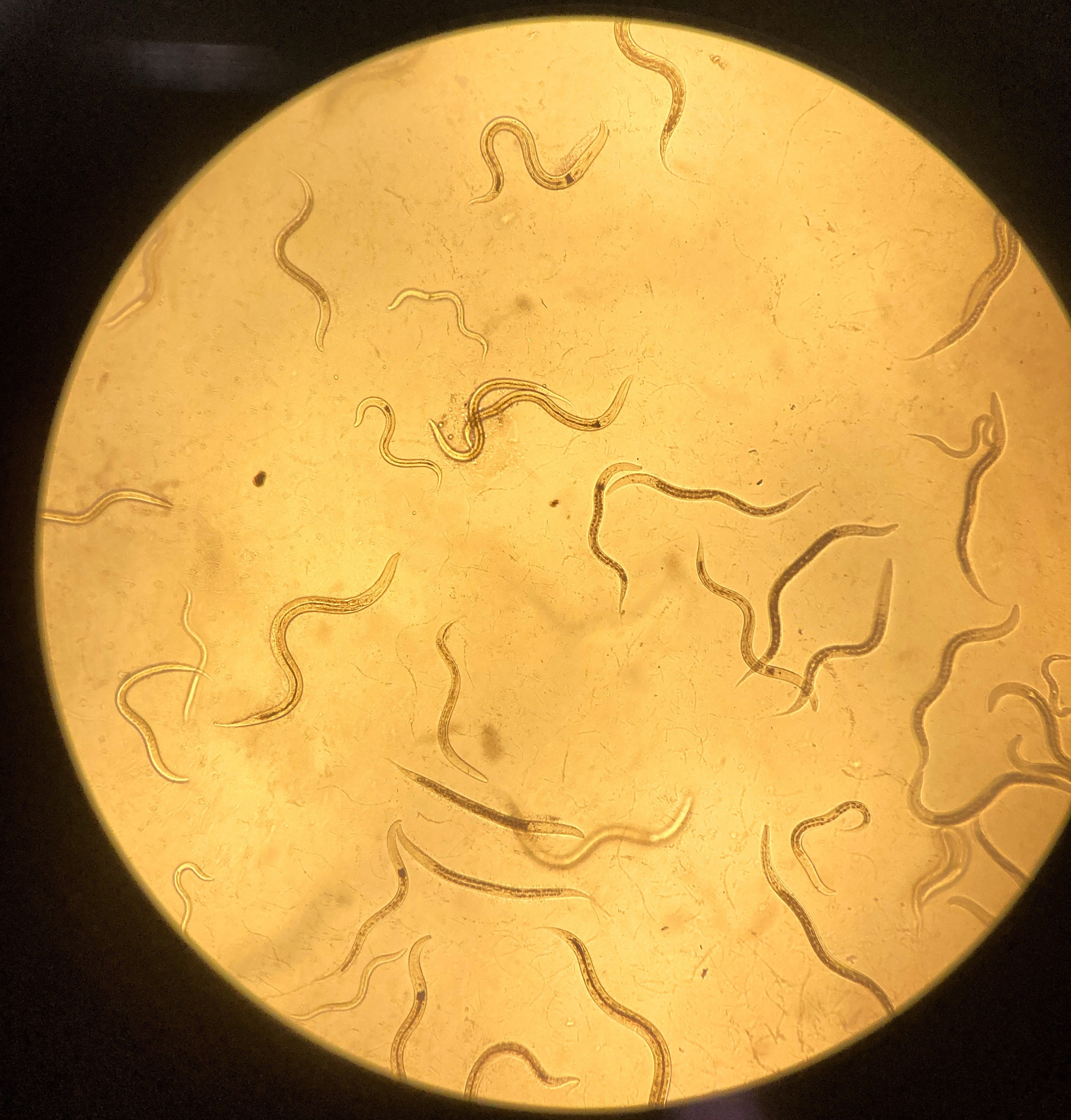
The C. elegans In-Vivo Research System

Caenorhabditis elegans serves as an internationally recognized model organism sharing ~60–80% gene homology with human disease pathways. At our Chittagong facility, we maintain synchronized nematode cultures on NGM plates seeded with E. coli OP50 to test bioactive extracts in living systems.

C. elegans under microscope
Funded & Ongoing Portfolio

Research Projects & Grants

Overview of active funded investigations, pandemic readiness initiatives, and completed biotechnology programs in our laboratory.

8 Total Projects
4 Ongoing / Active
4 Completed Studies
2010–Pres. Research Span
Showing 8 projects
Marine Macroalgae Ongoing (2025–Present)

Comparison of phytonutrient content among red, green and brown algae originating from Bangladesh

Comparative profiling and quantification of bioactive secondary metabolites, polyphenols, lipids, carotenoids, and proximate nutritional quality across red (Rhodophyta), green (Chlorophyta), and brown (Phaeophyceae) macroalgae native to coastal Bangladesh.

Pandemic Readiness & Virology Ongoing (2025–2028)

Institutional readiness for emerging-reemerging pandemic diseases: exploration of disease etiology at molecular level, evaluation of treatment in practice and development of novel antiviral strategies

Strategic multi-year institutional investigation focusing on molecular etiology of infectious pathogens, assessing clinical therapeutics in practice, and engineering novel candidate antiviral formulations and translational intervention strategies.

Applied Biotechnology Ongoing (2024–2026)

Formulation of a novel alternative Fusarium spp.-cellulase-free metal ion combined approach for shortening agarwood resin induction time in Aquilaria malaccensis

Developing an eco-friendly elicitation strategy using enzyme-free metal ion synergies in lieu of live fungal inoculants (Fusarium spp.) to accelerate oleoresin synthesis and substantially shorten agarwood resin induction time.

Seaweed Nutraceuticals Completed (2022–2024)

Phytonutrient contents and antioxidant activities of seaweeds commercially grown in Bangladesh

Quantitative evaluation of proximate nutritional constituents, total phenolic and flavonoid contents, DPPH/FRAP radical scavenging capabilities, and storage stability in commercially farmed seaweeds across the Bay of Bengal coastline.

Indigenous Flora Completed (2022–2023)

Comparison of nutrient content and antioxidant potential of locally grown indigenous and exotic dates

Biochemical profiling and antioxidant evaluation comparing indigenous wild date palm fruits (Phoenix sylvestris) with imported exotic varieties (Phoenix dactylifera), assessing carbohydrates, amino acids, minerals, and polyphenols.

In-Vivo Aging & C. elegans Ongoing (2021–Present)

Evaluation of in vitro antioxidant activities of different Curcuma species and study of their effect on aging in C. elegans

In-vitro phytochemical and antioxidant assessment of diverse native Curcuma rhizome extracts coupled with in-vivo lifespan longevity assays, locomotion preservation, and heat/oxidative stress resistance assays in synchronized Caenorhabditis elegans.

Microbial Enzymology Completed (2013–2014)

Isolation and identification of potential cellulolytic microbes from insect guts for biofuel production

Culture-dependent isolation, biochemical screening, and 16S rRNA gene sequencing of endosymbiotic cellulolytic bacteria residing in phytophagous insect digestive tracts, evaluating their catalytic capacity for lignocellulosic biomass bioconversion into fermentable sugars.

Bioenergy & Biocatalysis Completed (2010–2011)

Screening for high levels of cellulolytic activity in the phytophagous insects of Bangladesh for biofuel production and characterization of its cellulases

Biodiversity screening of indigenous defoliating beetles, grasshoppers, and phytophagous larvae across Bangladesh to quantify crude endoglucanase, exoglucanase, and β-glucosidase titers and optimize biochemical reaction kinetics for biofuel production.

Methodology Flow

Our Integrated Research Pipeline

From indigenous botanical collection to target validation and in-vivo physiological outcomes.

Step 01
Sample & Extraction Botanical sampling, freeze-drying (-50°C), and polarity-guided solvent extraction.
Step 02
Chemical Profiling Quantification of total phenolics, flavonoids, DPPH, FRAP, and enzyme inhibition.
Step 03
In-Silico Docking AutoDock Vina, PyMOL visualization, molecular dynamics, ADMET, and network pharmacology.
Step 04
In-Vivo Validation Lifespan curves, motility scoring, and juglone/H2O2 oxidative stress survival in C. elegans.